As parents, it can be tempting to feel responsible for filling every moment of our children’s day.
We search for activities, plan outings, rotate toys, and look for ways to keep them entertained. Yet some of my children’s most creative moments have come not when I had something planned, but when I didn’t.
It usually begins with a complaint.
“I’m bored.”
As parents, our instinct is often to solve the problem. We suggest a game, offer a craft, or try to think of something exciting to do.
But what if boredom is not a problem to be solved?
What if it is an invitation?
The other thing I have noticed, whether we like it or not, is that we are creatures of habit.
Children are no different.
If they become accustomed to constant entertainment, endless activities, or access to whatever toys they want whenever they want them, it can be difficult to go backwards. Not impossible, of course, but there will likely be some resistance along the way.
Last week, my three-year-old was having a particularly challenging day. I had given him several opportunities to change his behaviour, taking away one toy at a time. By the fourth toy, however, I had reached the end of my tether and decided to remove them all.
Into the car they went for the night.
The next morning there was a little whining about where his toys had gone, but what happened next surprised me.
With only a few wooden blocks and a ball left out, he began to play in a way I had not seen in a long time. His play became more adventurous, more exploratory, more dramatic. He wasn’t recreating scenes from a television programme or repeating something he had heard elsewhere. He was leading the play himself, inventing, imagining, and creating.
It was truly wonderful to watch.
In fact, I couldn’t believe I hadn’t done it sooner.
As it turns out, my son didn’t need more toys. He needed fewer options.
It made me wonder how often boredom is simply the doorway through which imagination enters.
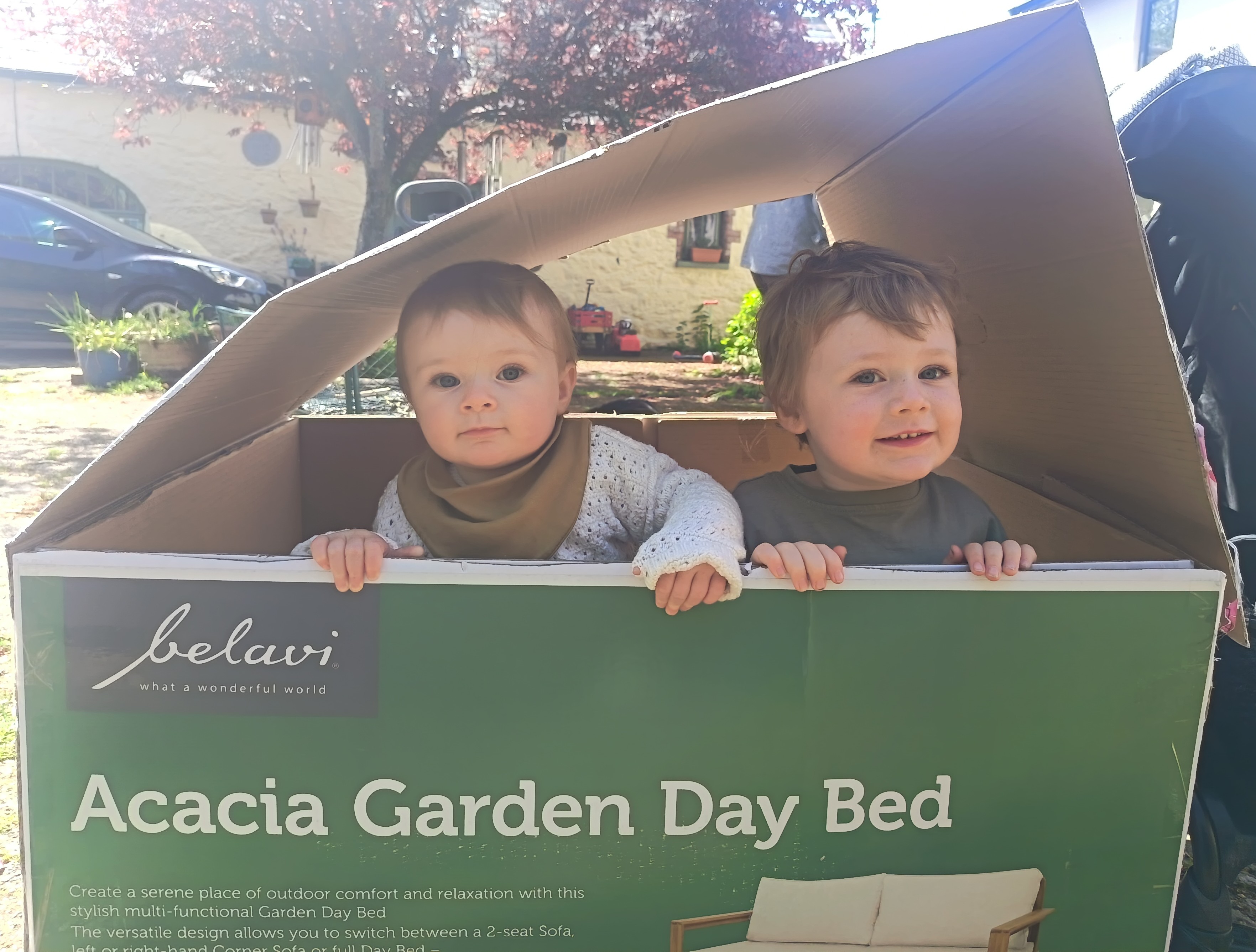
Children are remarkably creative when given the space to be. A stick becomes a sword. A cardboard box becomes a castle. A patch of grass becomes an adventure.
In the empty spaces, something unexpected begins to emerge: curiosity, creativity, and wonder.
Wonder has become something of a recurring theme in our home. In another reflection, I wrote about how Wonder Is Really Worship, and I am increasingly convinced that children are often our greatest teachers when it comes to seeing the world with fresh eyes.
When I think about the memories my children will carry into adulthood, I doubt they will remember every activity or outing. More likely, they will remember how home felt and the space they were given to simply be children.
It also makes me think of our modern discomfort with boredom says as much about us as it does about our children. We have become accustomed to constant stimulation. Silence feels uncomfortable. Waiting feels wasteful. Empty space feels like something that must be filled.
Yet some of life’s best things grow in spaces that are not crowded.
Wonder requires time.
Creativity requires room.
Relationships require presence.
Perhaps this is one reason children can teach us so much. Left to their own devices, they notice things adults overlook. A beetle crossing a path. A strangely shaped cloud. The way sunlight dances through the leaves.
In their boredom, they often rediscover wonder.
Of course, I am not suggesting that every moment of childhood should be left unstructured. Activities, hobbies, and family outings all have their place. But perhaps we need not fear the occasional complaint of, “I’m bored.”
Perhaps we can see it as the beginning of something.
The next time your child tells you they are bored, resist the urge to rush in with a solution.
You might be surprised by what grows in the space you leave behind.

Leave a Reply