Every October, the shops fill with skeletons, plastic spiders, and costumes that seem to get creepier and WAY more provocative every year. As a Catholic, every year I find myself more and more conflicted about how I engage with this holiday. The last few years I’ve decided to either dress up as something light-hearted or not partake at all.
In Ireland I grew up dressing up every year and going trick or treating with friends, not really having any idea why but a vague understanding that we were remembering the dead by doing this. My family members would light candles at church and visit the graveyard where my deceased relatives were laid to rest. That was all I knew though and over the years I’ve come to understand there’s a lot more to this tradition than the hallmark holiday now represents.
The Catholic Meaning of Halloween
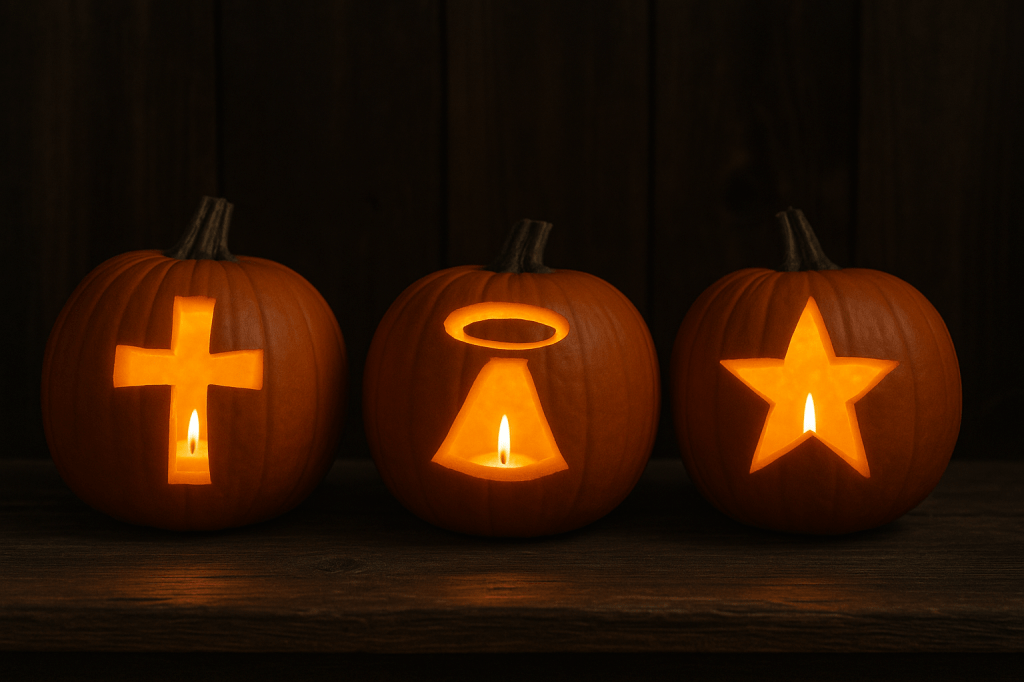
For Catholics, Halloween (literally All Hallows’ Eve) was never meant to be a night of fear, gore, or glorifying darkness. It’s the vigil of All Saints’ Day, one of the great feasts of the Church, and was traditionally a time of prayer, fasting, and preparing our hearts to honor the saints in heaven and pray for the souls of the departed. In Ireland and across Europe, older harvest customs and the Celtic festival of Samhain — with its bonfires, disguises, and food offerings — were gradually Christianized and given new meaning in light of Christ’s victory over death. Dressing up became a way to honor saints instead of scare off spirits, carving lanterns symbolized Christ’s light in the darkness, and going door-to-door was transformed into “souling,” where people exchanged prayers for the dead in return for small cakes.
The heart of the feast became deeply Catholic: a reminder that death is not the end, that we’re united to the Communion of Saints — the truth that all of God’s people, whether in heaven, in purgatory, or here on earth, are bound together in Christ’s love. The saints intercede for us, we pray for the dead, and together we live in one family of faith. Halloween, as All Hallows’ Eve, prepares us to celebrate this reality: that Christ has already conquered the darkness.
A Note on Irish Roots Today
On a personal note: I’ve noticed that in Ireland, there’s a growing fascination with “going back to our pagan roots.” Samhain festivals, goddess worship, and Celtic rituals are being revived as if they were somehow more authentic than Christianity. I get the appeal — it feels earthy, mystical, connected to the land. But when you look closely, you see that these practices are a mere shadow of the fullness that Christ brings. The early Church didn’t erase Ireland’s culture, it fulfilled it. Samhain’s longing to connect with the dead becomes the Church’s clear teaching on the Communion of Saints. The harvest fires that once kept away spirits become the light of Christ that conquers darkness. Rather than looking backward, I think we’re called to live out what the Church has already given us and celebrate October 31st as it was meant to be: a holy vigil that points us to heaven.
Family-Friendly Ways to Celebrate All Hallows’ Eve
I’ve often found myself wondering: How do I explain to my kids that Halloween doesn’t have to be about fear and gore?
The good news is: we don’t have to “cancel” October 31st. In fact, it’s already a holy vigil — the eve of All Saints’ Day! Instead of letting the culture dictate how we spend the night, Catholic families can embrace the deeper meaning of the feast with joy, prayer, and light.
Here are a few simple ways to do just that:
- Mark the Vigil with Prayer: Pray the Litany of the Saints together, light candles for deceased friends and relatives, and share their stories with your children.
- Host or Join an All Saints’ Party: Saint costumes, games like Saint Bingo or Pin the Halo, and snacks named after saints make it fun and meaningful. You could make “little flower cupcakes” inspired by St. Thérèse of Lisieux or perhaps “harvest popcorn” with fun mix-ins in remembrance of St. Isidore.
- Bring Light into the Home: Bake soul cakes, set up a small “Communion of Saints” altar, or read Scripture together about Christ as the light in the darkness.
- Practice Charity Instead of Trick-or-Treating: Visit elderly neighbours, collect food for the poor, or make little treat bags with saint stickers and holy cards to give away.
- Redeem the Pumpkins: Carve crosses or Christian symbols instead of scary faces, showing Christ’s light shining through us.
- End the Night with Joy: Share saint stories, watch a family-friendly saint movie, and close the night in prayer.
From Darkness to Light
Halloween doesn’t need to be about fear or darkness. As Catholic families, we can honor the true meaning of All Hallows’ Eve by celebrating the saints, practicing charity, and creating joyful traditions that shine the light of Christ. Let’s teach our children that holiness is the real adventure and that heaven is the greatest celebration of all.
All holy men and women, pray for us!

 This Mother's Fiat
Leave a comment